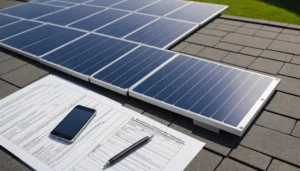

Introduction to Solar Energy Budgeting
As more homeowners in the U.S. turn to solar solutions for their energy needs, understanding how to budget for a solar installation becomes crucial. This guide will help you plan your finances effectively, taking into account the costs, savings, and available incentives of solar energy systems.
Investing in solar energy is not only a step toward self-sufficiency and environmental conservation but also a complex financial decision that requires strategic planning. This comprehensive guide will provide in-depth insights to help you budget effectively, considering all costs, both short-term and long-term, to maximize your investment in solar energy.
Step 1: Assessing Installation Costs
The first step in budgeting for solar energy is understanding the initial investment. Here, the size of your solar array, type of panels, and installation labor will play significant roles. For an average U.S. home, installed costs can range dramatically based on system size and location.
- Solar panel costs: High-quality panels are crucial for efficiency and durability. Prices per watt tend to range between $2.50 and $3.50.
- Installation costs: Local labor rates and complexities of the installation site will impact this cost. Hiring experienced installers ensures safety and compliance with local regulations.
- Permitting and inspection: Don’t overlook the costs related to local permits and post-installation inspections. These can add several hundred dollars to your expenses depending on municipal requirements.
Example:
Consider a typical 5 kW system, which would roughly require 18 solar panels. If each panel costs $250, the total would be $4,500 for panels alone. Adding installation, permitting, and other associated costs can bring the total to approximately $13,000 – $15,000 before any incentives.
Step 2: Estimating Maintenance and Potential Savings
While initial costs are important, ongoing maintenance and potential savings are vital to consider in your budget.
- Maintenance fees: Most solar systems require minimal maintenance, but annual inspections and occasional cleaning may incur minor costs. Planning for $100 to $150 annually for regular maintenance is usually sufficient.
- Energy savings: Calculate projected savings by comparing current utility bills against those predicted with solar energy. Tools such as Solar Panel Needs Calculator allow you to refine these estimates based on local sunlight exposure and panel efficiency.
Example:
If your current electricity bill is $150 per month, and solar energy reduces this by 70%, you would save approximately $1,260 annually. Over 20 years, assuming no increase in electricity rates, this adds up to $25,200 in savings.
Step 3: Exploring Financial Incentives
Take advantage of available financial incentives that can significantly reduce your solar energy costs.
- Federal tax credits: Options like the Investment Tax Credit (ITC) allow you to deduct a percentage of your installation cost from your federal taxes. As of 2021, the ITC offers a tax credit at 26% of the cost of the system.
- State-level incentives: Explore rebates and incentives specific to your state. Each state has its own set of incentives, which can be discovered on government websites or energy department resources. Details on maximizing these can be found here.
Example:
If your system costs $15,000, a 26% federal tax credit would save you $3,900. Additional state incentives could further reduce this amount.
Step 4: Evaluating Financing Options
Solar installations can be financed through various means, each affecting your long-term financial plan differently.
- Cash purchase: Paying upfront will save the most in interest, though initial costs are higher. This option is best for those who can afford the upfront payment and want to maximize their long-term savings.
- Solar loans: Loans can spread costs over time but will add interest fees. Look for low-interest loans specifically designed for solar investments to keep additional costs minimal.
- Power purchase agreements (PPAs): With a PPA, a third-party owns the system, and you pay for the energy generated at a set rate. This can be a good option if you prefer lower upfront costs, as the associated risk is lower, but total savings over time might be less.
Limitations:
Each financing option comes with its own set of limitations, whether it’s the upfront cost of cash payments, the interest and eventual total payments of loans, or the lower long-term savings of PPAs. Consider what suits your financial strategy best.
Common Mistakes to Avoid
Inadequate research or rushed decisions can lead to financial missteps. Common mistakes include:
- Underestimating maintenance costs and potential system upgrades, which can escalate unexpectedly over time.
- Ignoring potential changes in federal or state incentives, which can fluctuate and affect your return on investment.
- Selecting poor-quality panels based solely on price without considering efficiency, which can lead to higher long-term costs in energy deficits and replacements.
Avoid these by conducting thorough research and consulting with multiple reputable solar installers and financial advisors to ensure you have a clear understanding of each component involved in solar budgeting.
Realistic Long-term Financial Planning
A well-thought-out budgeting strategy should include long-term planning for future expenses and savings:
- Technology upgrades: Consider the potential need for future upgrades to your system as technology evolves. Investing in professional assessments every few years can help identify when efficiency gains justify the cost of upgrading.
- Potential savings reinvestment: Reinvesting savings in your energy system can enhance efficiency. This may include additional panels or integrating a solar battery storage system, which can increase your off-grid capabilities.
Conclusion
Effective budgeting for solar energy involves comprehensive planning, from the initial investment to understanding long-term savings and costs. By carefully considering each factor presented in this guide, you can make informed financial decisions that align with your energy goals. With a clear understanding of your solar energy budget, you can confidently take a significant step toward sustainable living and long-term financial savings.